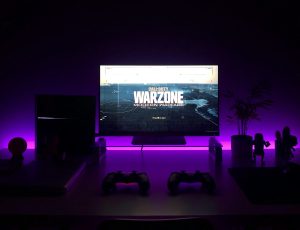
TL;DR / Summary: The first match of a session is usually the worst one. A five-minute lobby warm-up — movement, one aim drill, one arena pass — protects your rating from your own cold hands.
The cold-start problem
Mechanical skill has a warm-up curve. Reaction time, mouse control, and prediction all improve for the first ten to fifteen minutes of play, which means the opening match of a session is played by a slower version of you.
In a casual game that costs nothing. In a ranked lobby it costs rating, and the loss is attributed to the match rather than to the missing warm-up.
Watching professional players warm up before a match looks like superstition until you try it for a week. The difference is easiest to notice in the first three engagements of the first game.
Five minutes, three parts
The warm-up does not need to be elaborate, and it should not be exhausting. The goal is to wake up the specific systems the game uses, not to tire them out before the real thing.
Start with movement: two minutes of strafing, jumping, and turning in an empty lobby or practice mode. The point is to reconnect hand and camera without the pressure of an opponent.
A repeatable routine
- Minute 1–2: move and turn, no shooting — get the camera under control
- Minute 3: tracking drill on a moving target or a bot
- Minute 4: one flick drill at short range, then one at long range
- Minute 5: one slow lap of a real map, calling out sightlines
Keep the order fixed. A routine you can repeat without thinking is one you will actually do, especially on days when you feel sharp and want to skip it.
Why movement comes first
Most players warm up by shooting at a static target, which trains aim while the camera is still. Then they enter a lobby, move constantly, and find the aim they just practised has disappeared.
Movement first re-establishes the frame the aim sits inside. If the camera is smooth, tracking follows; if the camera is still cold, no amount of flick practice helps.
Warm up the platform before you polish the tool.
If the game has a practice arena with moving bots, use it. Static targets flatter your aim and teach nothing about prediction.
The map lap
One slow lap of the map you are about to play re-loads spatial memory. Note the two most common engagement lines and the two rotations you will actually use.
Say them out loud. Speech forces a slightly slower, more deliberate pass than silent play, and the recall lasts into the match.
Change the map when the lobby changes. A warm-up on the wrong map produces confidence without context, which is worse than no warm-up at all.
What not to do before a ranked session
Do not warm up in ranked matches. That is the habit the routine is meant to replace, and it usually requires three games to recover from.
Do not warm up for forty minutes. Fatigue after a long practice block looks exactly like being cold, and players misread it as needing more practice.
Do not change sensitivity during the warm-up. Adjustments made while warming up are made with cold hands and are almost always wrong an hour later.
Tracking whether it works
Record the result of your first match for two weeks with and without the routine. Most players see the difference in first-engagement win rate rather than in final score.
If the routine does not help, the problem is probably not mechanical. Cold hands are a mechanical issue; a bad opening decision is a habits issue, and no drill fixes it.
Review one first-match replay per week and look only at the first thirty seconds. That narrow window tells you more about readiness than a full session review.
Adapting the routine to your setup
If the lobby has no practice mode, use a bot match with a fixed loadout. If the game has no bots, spend the five minutes in a training range before queuing.
Keep the routine short enough to survive a busy evening. A warm-up you skip when tired is a warm-up that only works when you do not need it.
More general practice structures and control habits are covered in the guides at Crazy Cattle 3D itch, including movement drills that fit inside five minutes. Then pick the three that fit your own lobby and do them in the same order every time.
Warm-up on the days you feel sharp
The temptation is to skip the routine when everything feels good. Those are the days the routine matters least and the habit matters most.
Keep it identical. A routine you only follow when you feel slow is a routine you cannot trust.
Consistency on good days is what makes good days repeatable.